
Yesterday’s Deviants, Tomorrow’s Folk Heroes
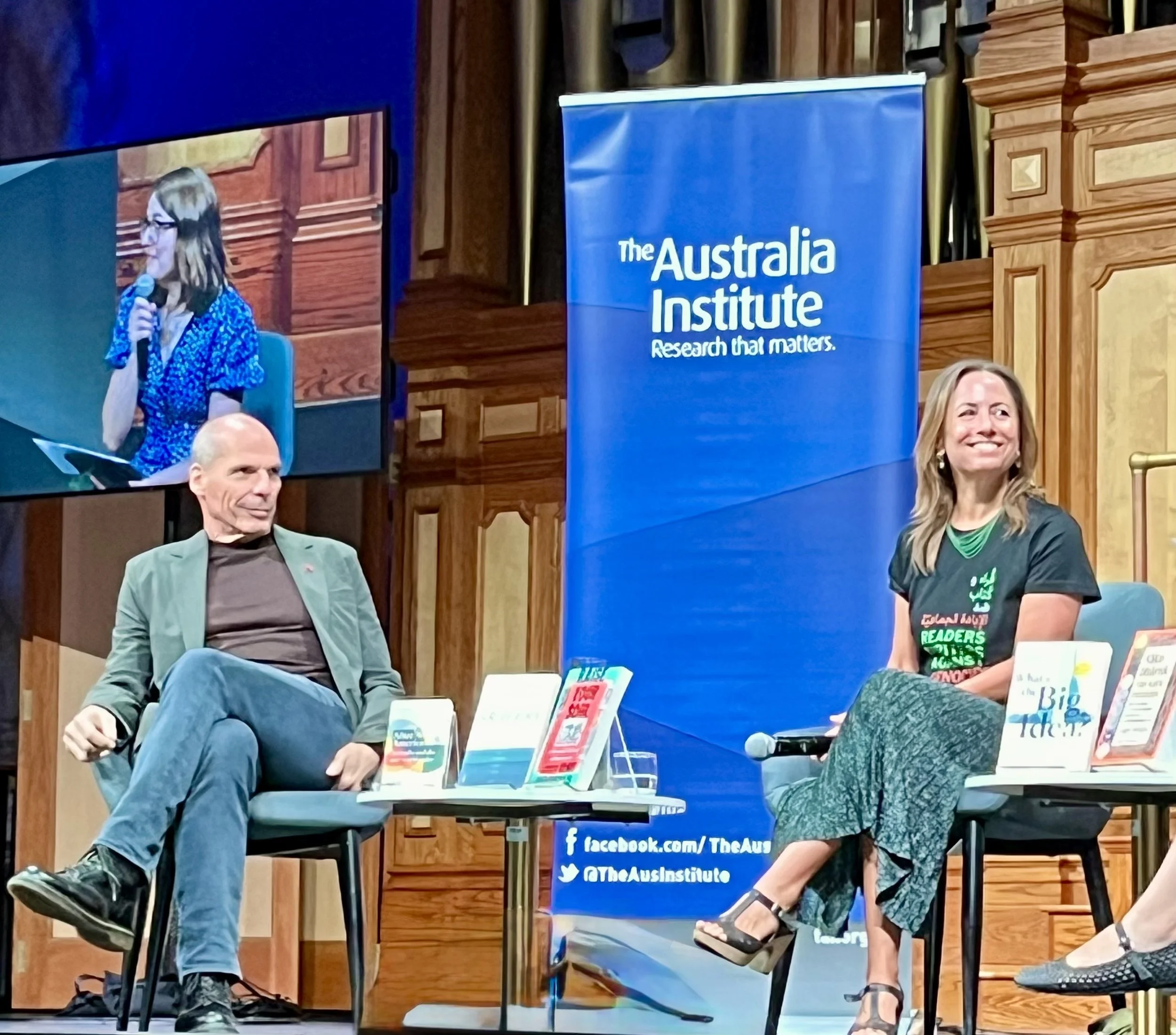
This an amended version of a speech delivered by Professor Clare Wright OAM at An Afternoon with Yanis Varoufakis and Friends at Adelaide Town Hall on 1 March 2026, an Australia Institute event organised as part of Constellations: Not Writers’ Week.
I’ve been humming a tune to myself for the last week or so. Fragments of the words to this song drifting into my head as I wait at the lights or brush my teeth in the shower. The line that keeps coming into my head is ‘I have squandered my resistance.’
I’d not had this song on my mind when I’d agreed to Louise Adler’s request to speak on the panel on which Yanis and I were originally scheduled to appear at Adelaide Writers Week. The forsaken session was titled: Fighting Fascism. My scholarly expertise is the history of Australian democracy. The history of democracy is, arguably, a history of resistance. To fascism, yes, and to other forms of authoritarianism, autocracy and suppression of dissent.
Historians join dots, look for patterns, as they chart change and continuity over time. One of the statements that the Adelaide Festival Board released, shortly after authors started boycotting Writers Week faster than you could say springbok, requested that people gave them time to work through a situation they said was ‘unprecedented’. What a joke.
A show of literary community solidarity following the receipt of a letter from a Zionist organisation complaining about the inclusion of Dr Randa Abdel-Fattah in the program had occurred at the Bendigo Writers Festival only five months earlier. Fifty artists — myself included, as the co-curator of that festival — withdrew their participation following the imposition of a code of conduct designed to muzzle Dr Abdel-Fattah.
There was literally a precedent.
Resistance to the Adelaide Festival board’s disinvitation of Dr Abdel-Fatteh was not only likely; it was virtually assured. Her cancellation was a provocation.
Both history and human nature wrote the script.
To resist is to be human.
Newborn babies will scrunch up their tiny red faces and yowl their displeasure at so much incitement as a tummy rumble. (I’ve just become a grandmother. My five-week-old grandbaby has taught me anew that we are born apostates.)
Toddlers will plank on the floor – arms and legs rigid with righteousness – before succumbing to a demand as inconvenient as a bath or bedtime.
Teenagers, as we all know or sheepishly remember, will put themselves in great peril rather than conform to the banal expectations of their parents, teachers or the law.
Historically, men have resisted the insanity of the battlefront, whether by constitutional means such as anti-conscription rallies and referenda, or more gruesome measures, such as shooting themselves in the foot, a self-inflicted injury rewarded by discharge.
While women have resisted the call of duty – whether to king and country, or hearth and home – by individually and collectively proclaiming their human right to abort their foetuses, leave their marriages, name their rapists. Or vote.
Globally, Indigenous people have resisted the white supremacist narrative arc of Darwinianism, of deductive dispossession, to reclaim sovereign rights to land, water and sky, to political independence, to legal equality, to dignity.
Raising Cain, playing possum, having a voice, saying no, telling parents or partners or the state or the colonisers to fuck off.
Resistance is:
The refusal to accept.
The unwillingness to submit.
An aversion to surrender.
Defiance of crooked rules.
Defence of porous borders.
Protection of fragile boundaries.
We all do it. We all resist. Every single day.
But, with apologies to Orwell, some resistance is more palatable than others. Forget totalitarianism. It turns out not all democratic animals are created equally either.
Any evidence-based study of history cannot fail to elicit the hypocrisy of modern democratic regimes that claim to promote fairness, the rule of law and freedom of speech while in fact privileging certain citizens version of justice, safety and social cohesion over others.
I stand here as a Jewish Australian, who lost family in Germany’s genocide of my people, resisting the faulty exceptionalism that can turn a blind eye to Israel’s genocide of the Palestinian people in Gaza. This does not make me a self-hating Jew any more than it makes the victim of domestic violence a self-hating woman for leaving her husband or a construction company employee a self-hating worker for downing tools and walking off an unsafe building site.
The past six months have highlighted for many white, middle-class people — particularly those bullied and bashed by police at a peaceful resistance rally in Sydney’s CBD during the red carpet visit of President Herzog — what Australia’s First Nations’ people have long known: that state-sanctioned violence is designed to silence and subdue as much as to kill and maim. And that resisting the logic and the long arm of the politically, socially, economically or culturally powerful will not win you friends and influence influential people.
In their day, men who resisted being drafted into the Vietnam war were vilified by the press and incarcerated by the state. In the United States, over three thousand conscientious objectors went to prison. In 1971, five women from the Save Our Sons movement in Melbourne were jailed for handing out anti-war leaflets.
Did this generation of resistance to military solutions to geopolitical problems threaten national social cohesion? Or reflect values that we like to consider—ultimately—to be quintessentially Australian. A larrikin antiauthoritarianism. A belief in the fair go.
But here’s the progressive rub:
The 66.1 percent of Australians who ticked the no box in the Voice referendum … were they demonstrating cowardice and ignorance? (“If you don’t know, vote no.”) Or steadfast resistance to perceived overreach? After all, like the draft dodgers, they too turned their backs on what the government of the day wanted for the nation.
And those who are presently flocking to One Nation or donning MAGA hats are resisting what they genuinely believe to be dangers to the moral order of their universe, whether reds under the beds or trans people in the beds.
At least not in the short term.
In his National Book Award-winning One Day, Everyone Will Always Have Been Against This, Egyptian-Canadian-American journalist Omar El Akkad criticises liberal complacency in its response to Israel’s genocide in Gaza as much, if not more, than the deplorable basket case of near and far right reaction.
His title is, of course, brilliant.
Over a century on, the jail-worthy defiance of the British Suffragettes becomes a Hollywood movie worthy story of both courage and destiny. Of course women should be able to vote!
Nelson Mandela, Che Guevera, Jose Ramos Horta, Mohatma Ghandi, Emmeline Pankhurst, Malala Yousafzai. Even old mate Ned Kelly, a cop killer if ever there was one, but also a lad who said no.
Yesterday’s deviants are tomorrow’s folk heroes.
In time, the temper tantrum of the toddler or recalcitrance of the teenager becomes cherished family folklore.
The gaping wound becomes the storied scar.
So how to resist the predetermination of time’s passage: the agency of history-making rather than the sense of inevitability inherent in history-writing?
I think the answer comes back to that song lyric: I have squandered my resistance.
Think about it for a minute: What might it look like to you – to squander your resistance?
And what does not squandering your resistance look like?
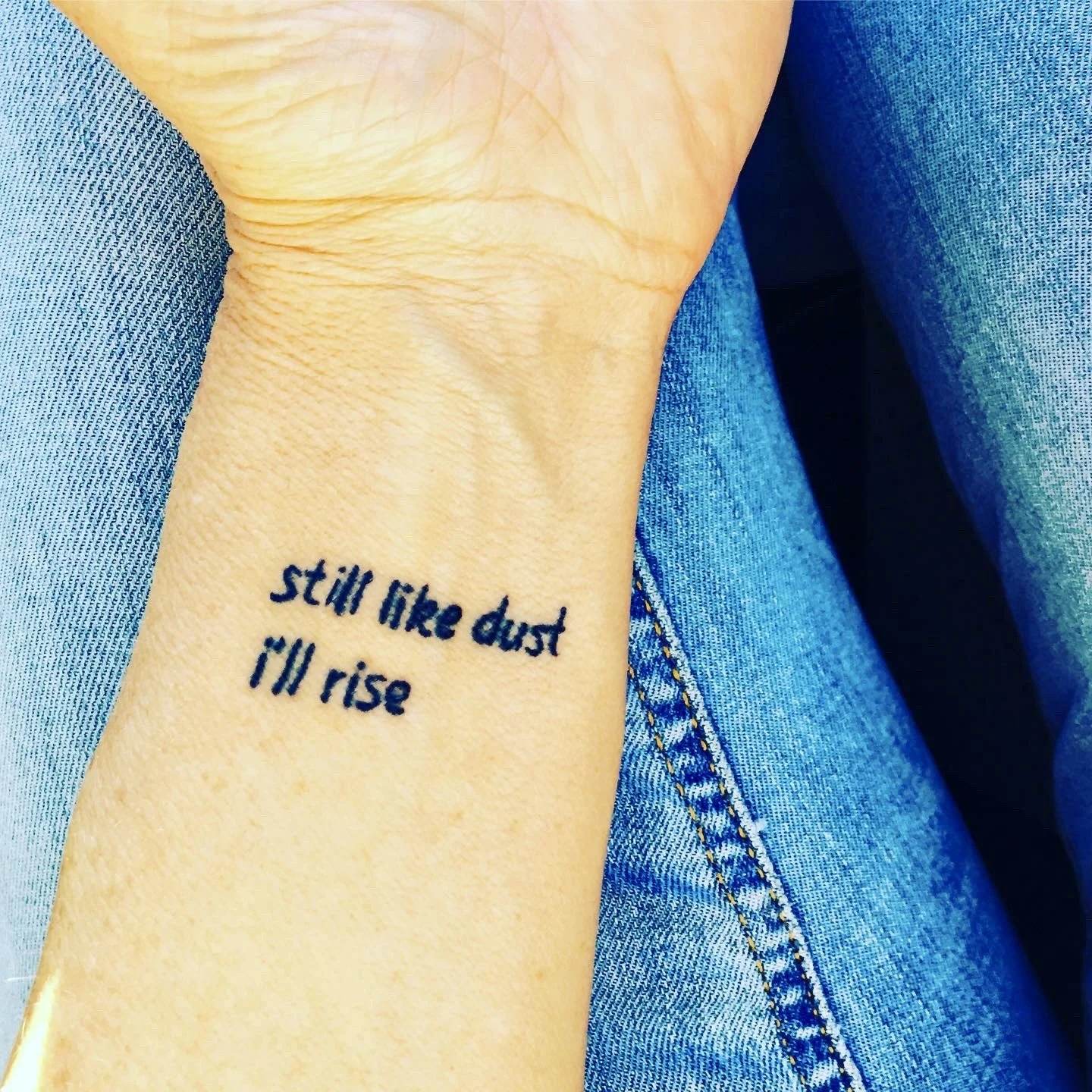
Does not squandering your resistance mean getting the first and last lines of Maya Angelou’s defiant poem Still I Rise tattooed on your wrists for your 50th birthday?
Does not squandering your resistance mean wearing a slogan t-shirt?
Does not squandering your resistance mean turning up to a street rally when the Premier wants you to stay home? Shouting words like ‘from the river to the sea’ that might see you arrested in some states?
Does not squandering your resistance mean withdrawing your participation from a writers’ festival when a fellow author’s freedom of speech is threatened, thus imperilling all our rights of lawful expression?
Does it mean buying a ticket to an alternative writers’ festival when the mass resistance of over 180 authors forces the cancellation of a free cultural event?
Is it the sort of resistance that sees the emergence of an online literary journal like Lantana emerge out of the ashes of the bonfire of inanities that was the closure of Meanjin?
The sort of resistance that fuels grassroots letter-writing campaigns to defend publishers against media accusations of and disciplinary hearings for ‘conflict of interest’ when their award-winning lists include Palestinian academics and First Nations poets who refuse to go quietly in the face of the genocide of their people, past and present.
That’s the thing about democracy. Whether it’s the rebel miners and shopkeepers at Eureka resisting class tyranny. Or the Federation-era women resisting gender exclusion from the body politic. Or the Yolŋu of North East Arnhem Land resisting a land grab on the 1960s extractive frontier.
In a democracy, you have a choice whether to consent to the terms of your oppression.
You get to say whether you accept a pocketful of mumbles, a gutful of specious weasel words, in place of the democratic promises of freedom.
Professor Clare Wright OAM is an award-winning historian, author, broadcaster, podcaster and public commentator who has worked in politics, academia and the media. Clare is currently Professor of History and Professor of Public Engagement at La Trobe University.